

Consulting services
Overview
Developing new technologies for minimally invasive and robotic surgery requires a clear understanding of how they will fit into clinical practice. Identifying clinical needs, workflow requirements and operational constraints at an early stage can help ensure that innovation is aligned with the realities of the operating room.
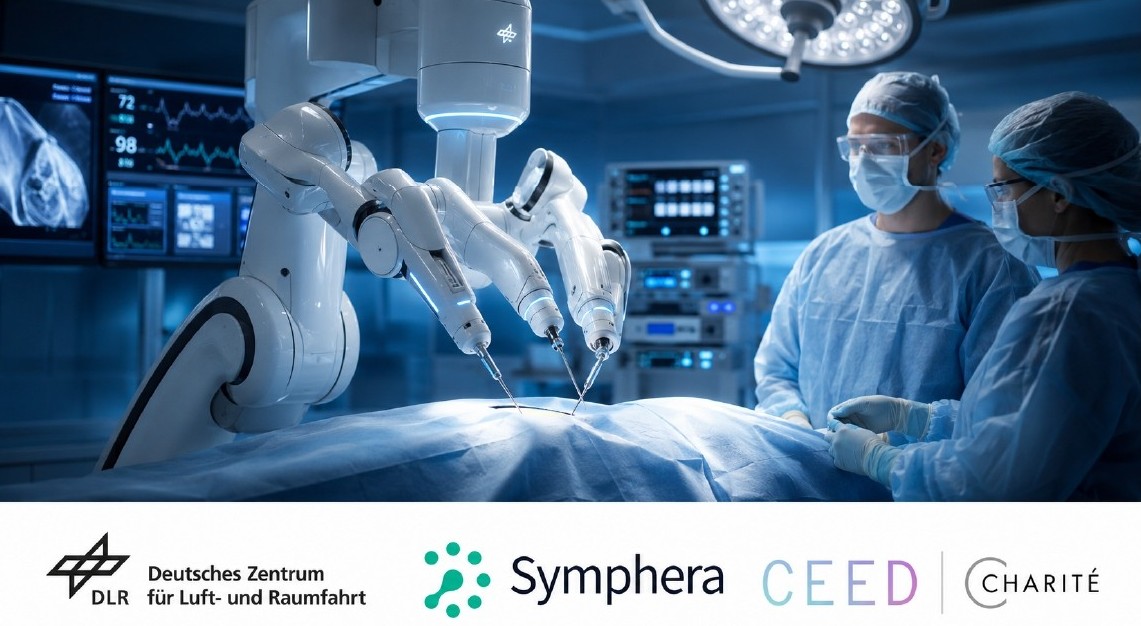
As part of TEF-Health, the collaboration between Symphera and CEED - Charité Healthcare Services GmbH focused on building this understanding for an automated instrument exchange technology intended for minimally invasive and robotic surgery.
Symphera develops intelligent automation solutions for minimally invasive surgery, including automated instrument exchange systems, robotic end effectors and connectivity solutions for handheld surgical devices. The company’s goal is to improve surgical workflows, reduce manual workload and support more efficient, data-enabled procedures.
To support the next stages of development, Symphera sought to verify a number of assumptions related to the clinical use, technical implementation and operational integration of its technology. Through a structured process involving workshops, expert consultations, interviews and data-based analyses, the project generated the knowledge needed to guide future development decisions and reduce uncertainty around implementation and adoption.
Impact
The collaboration provided Symphera with a clearer understanding of the conditions and requirements that will influence the future development of its automated instrument exchange technology.
By systematically reviewing assumptions with clinical experts and other relevant stakeholders, the project helped identify which needs are most relevant in practice, which challenges may affect implementation and where future development efforts should be focused. This allowed Symphera to move beyond early hypotheses and build a stronger evidence base for decision-making.
The work also helped bridge the gap between technology development and clinical reality. Through workshops, interviews, expert consultations and analyses based on existing hospital data, the company gained valuable insights into surgical workflows, operating room infrastructure and the broader context in which the technology may eventually be used.
As a result, Symphera obtained a structured and documented set of requirements that can support future development activities, prototype evaluations and preclinical assessments. The project reduced the risk of pursuing development paths that may not correspond to real clinical needs and established a more reliable foundation for the next stages of the technology’s evolution.
The Challenge
Developing new technologies for surgical robotics involves making important decisions long before a product reaches clinical practice. At this stage, assumptions about user needs, workflow integration and technical requirements can strongly influence development priorities.
For Symphera, the challenge was to determine whether these assumptions accurately reflected the realities of minimally invasive and robotic surgery. The company wanted to better understand the needs of surgeons and healthcare organisations, identify potential limitations of existing approaches and ensure that future development activities were aligned with actual clinical and operational requirements.
Achieving this required a structured approach capable of collecting, analysing and validating information from different perspectives, while transforming those findings into practical guidance for product development.
The Solution
To address these needs, CEED - Charité Healthcare Services GmbH supported Symphera through a structured requirements analysis delivered within TEF-Health.
The collaboration began with an initial workshop and subsequently evolved into a BMFTR project focused on validating clinical, technical and infrastructural requirements for automated instrument exchange in minimally invasive and robotic surgery. The work combined structured discussions with Symphera, rapid validation activities with robotic surgery experts, targeted deep-dives, clinical workshops and internal alignment sessions.
Additional activities included surveys, expert interviews and workshops addressing surgical procedures, operating room infrastructure and data integration. CEED also carried out analyses based on existing hospital data to help quantify clinical and organisational requirements.
The project further supported iterative evaluations of tool-change prototypes, the preparation of a test concept, assistance with the ethics application process and the planning, execution and analysis of preclinical evaluation activities.
By translating clinical, technical and health-economic requirements into a structured development framework, the collaboration provided Symphera with documented requirement classifications, defined use contexts, requirement identifiers and a traceability matrix.