Advancing Europe’s Testing and Experimentation
Facilities for AI
Test, validate, and refine your AI solutions in real-world European facilities.


Bringing together the European TEFs for Artificial Intelligence

Overcoming challenges of AI adoption in agrifood
Empowering innovators in the agrifood sector with customised tools for the validation of AI and robotics solutions.
Overcoming challenges of AI adoption in agrifood
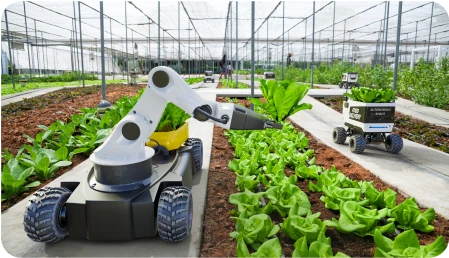
Bringing AI solutions into the agri-food sector is not straightforward. Companies often face difficulties in testing technologies in real-world conditions, accessing reliable data and infrastructures and ensuring that their solutions comply with regulatory and ethical requirements.
For many SMEs and innovators, it is also challenging to demonstrate performance and impact, reduce risks before market entry and understand how their solution fits within a rapidly evolving European AI ecosystem.
agrifoodTEF addresses these needs by providing access to specialised testing facilities, domain expertise and validation services tailored to agriculture and food systems. It enables companies to move from concept to validated solution by offering a structured experimentation environment, where technologies can be tested, refined and trusted.
Browse the agrifoodTEF service catalogue


From industrial complexity to AI deployment
Empowering innovators in manufacturing and robotics with tailored tools for the validation of AI-driven industrial solutions.
From industrial complexity to AI deployment
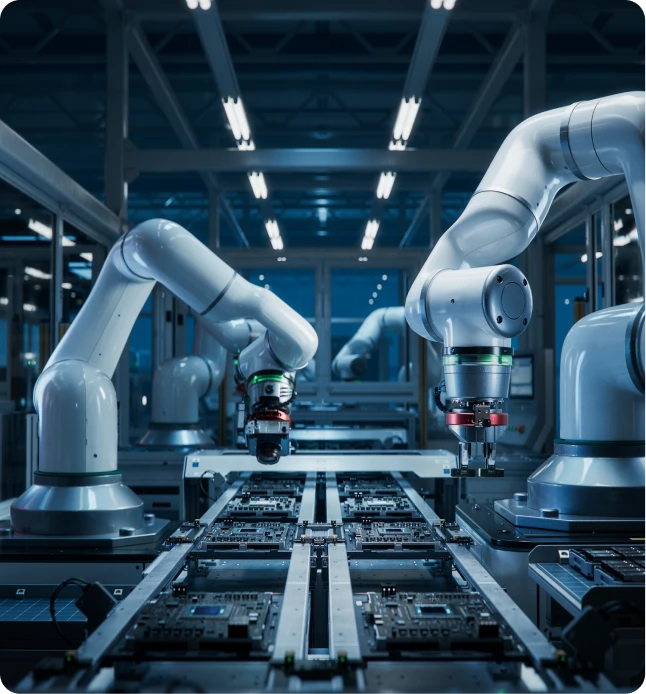
Developing AI solutions for manufacturing and industrial environments comes with specific challenges. Companies often struggle to test technologies in real production settings, ensure reliability and safety, and integrate AI into complex industrial processes without disrupting operations.
Limited access to industrial testing facilities and production environments, difficulty in validating performance, reliability, and safety at scale, integrating AI with existing industrial systems and processes and uncertainty around standards, compliance and certification requirements are only some of the challenges that EU organisations are facing.
AI-MATTERS addresses these needs by providing large-scale testing and experimentation facilities for AI in manufacturing and robotics. It enables companies to validate their solutions in realistic industrial environments, ensuring performance, safety, and compliance before market deployment.
Browse the AI-MATTERS service catalogue


Making AI work in real urban environments
Empowering innovators in manufacturing and robotics with tailored tools for the validation of AI-driven industrial solutions.
Making AI work in real urban environments
Deploying AI solutions in cities and communities presents unique challenges. Solutions must operate in complex, dynamic environments, integrate with existing infrastructure, and ensure safety, interoperability, and public trust.
Organisations often face difficulties in testing technologies at city scale, accessing real-world environments, and ensuring compliance with regulatory, ethical, and societal requirements. Demonstrating impact and scalability across diverse urban contexts can also be challenging.
CitCom.AI addresses these needs by providing access to large-scale testing and experimentation facilities for AI in smart cities and communities. It enables organisations to validate solutions in real-life environments, ensuring they are reliable, interoperable, and ready for deployment.
Browse the CitCom.AI service catalogue


Bringing AI safely into healthcare practice
Empowering innovators in manufacturing and robotics with tailored tools for the validation of AI-driven industrial solutions.
Bringing AI safely into healthcare practice
Developing and deploying AI solutions in healthcare involves strict requirements in terms of safety, reliability, and compliance. Organisations must ensure that their technologies meet regulatory standards, protect sensitive data, and deliver clinically relevant outcomes.
Accessing real-world testing environments, validating performance in clinical settings, and navigating regulatory frameworks can be complex and resource-intensive. For many innovators, the ability to demonstrate trust, safety, and real-world impact is essential to making their solutions credible and attractive for market uptake.
TEF-Health addresses these challenges by providing specialised testing and experimentation facilities for AI in healthcare. It enables organisations to validate their solutions in realistic clinical environments, ensuring safety, compliance, and readiness for market deployment.
Browse the TEF-Health service catalogue




How to access TEFs services?
Each TEF offers numerous testing and validation services for the sector they operate in. These services can be physical or virtual and range widely depending on the customers needs.
To make sure you select the right service for you, we recommend following the listed steps and contact the TEF to obtain a tailored recommendation and detailed information on the service delivery and conditions.
Explore the links below to get more details on the next steps of your collaboration with the TEFs.

STEP 1: CONNECT
Contact the TEF to obtain more information

STEP 2: SCOPING AND DEFINITION
The TEF will assess your needs and the best service for you

STEP 3: SERVICE EXECUTION
Get ready to benefit from the service!

STEP 4: CLOSING & FOLLOW UP
Leave your feedback!
Explore other customers testimonials and success stories